Saturday, August 15, 2020

Muscadines and Figs

For the first time, I'm getting some muscadines.  I've planted six vines (two had to be replanted when the first died).  They have been in the ground for almost three years now, but this will be the first year I'll get more than one or two grapes per plant.  The biggest crop this year is on my Ison vine, and it is the one that is ripening first:


It's only going to be big compared to previous years.  The Ison looks like it has a couple of pounds' worth on it.  The Late Fry has maybe one pound; some of the others have a couple of grapes as in previous years.

I've also picked some figs.  I have yet to get a single fig off of a plant installed by me--actually, I have yet to have one planted by me live very long, a story for another day--but there's an old fig tree planted by the previous owner that I'm getting some off of this year.  There were two originally, but ambrosia beetles attacked one and I took it out.  The other one has probably been producing every year, but I haven't gotten many off of it--as I'm learning, the ripe ones are quickly attacked by wasps, ants, and June bugs.

The harvest from the fig tree is likewise pretty modest--there are many more that are too high for me to reach or that have ripened and been turned into bug food--but it's nice to have some (I got more than the picture shows; that's just one days' worth).  I'm going to guess it's a Celeste fig, but that's only a guess.

I also have apples and pears pending...


Sunday, August 9, 2020

Brooding Chicks

I finally pulled the trigger on chickens.  They are available in feed stores and Tractor Supply in the spring (and sometimes other times), but the assortment is variable, changing day to day.  This spring, Tractor Supply had straight run Lavender Orpingtons one day; the next day it was Rhode Island Red pullets.  So I ordered online.

They arrived May 4.  I intended to get two males and six females, all Barred Rock.  I wanted about one male, four females going forward, and ordered extra to cover for losses.  I think I actually got Barred Rock pullets and Cuckoo Maran cockerels; two immediately looked different and had different leg banding.

One of the suspected Others is sort of at the lower edge of the group in this picture.  The males had a lot more yellow on them initially.

The overly-yellow individual also distinguished himself starting on about Day 2--it became pretty clear he was the dominant one in the group.  They all clustered under the heat plate (which worked very well; my house was cold in early May) and surged out as a group periodically to drink and eat. The yellow-ish one would lead the group out from under the plate most of the time.

As those who have raised chickens know, the cute puffball stage only lasts about a week.  They soon began adding a few feathers.


And within a couple of weeks they started to look pretty ragged.


I kept them inside for about five weeks.  After that time they were getting crowded in the stock tank and were trying to fly around, which wasn't working well: I built a screened cover for the top (much needed). Also much needed was the domed cover for the warming plate; if I hadn't had it the top would've been a bit soiled.  Actually, more than a bit.

I had also heard that brooding chicks caused a lot of dust.  For the first week, there was no problem.  Then, as the pictures show, their feet started to grow, outpacing their bodies.  They also started to scratch enthusiastically.  That kicked up dust.  It soon became epic, Dust-Bowl-like dust.

As the top picture shows, I gave them some chick grit. They may not have needed it with the starter crumbels, but they were very interested in it and ate a lot.  They soon started to try to stand in the little container and kick it out; I would find a lot in the bottom when I swapped out the shavings.

By early June they were largely feathered; it was largely warm, and they largely needed to be out in the yard.  So they went.  Despite my fears of neonatal death, all survived the first few weeks.


They're now basically full-grown; the above picture is from late July--they were about 12 weeks old.  They may still add some size but are pretty huge now.  The breed difference is apparent in the picture:  one of the males is on the left.

I have them in a mobile coop, AKA chicken tractor.  So far I haven't used them for any clearing/tilling duties, but that will be coming soon.  I didn't put my garden in this year because in the March/April time frame I was building the tractor on weekends.  It didn't take as much time as that suggests, but I needed help for some things and mostly only worked on it on Saturday afternoons.  At any rate, I'm going to let them clear, till, and fertilize my garden space for next spring.  They should enjoy that.


Sunday, August 2, 2020

Poor Judgement by a Toad

I have toads in my yard near my back door.  I actually ran over one with the truck when backing out a few months ago, but otherwise I see them frequently when walking the dog early in the morning.  After a recent heavy rain, I saw the picture below in the suddenly-full plant saucers.


Apparently the toad was ready to lay eggs and the full saucers looked like a reasonable body of water to do so in.  There really isn't any other water nearby.  However, my plant saucers are in no way viable nurseries for tadpoles.  Alas.

In the absence of any still bodies of water--I actually don't know where the nearest one is--any toads that wander into my back yard have few options for spawning.


Monday, July 13, 2020

Beginning of the Blueberry Harvest, 2020

It's blueberry time.  I've moved, and don't have the five fairly mature bushes that I used to have, but I have five new ones (one of which has not yet produced much).  I won't get 20 pounds off of them this year, but may end up with as much as 6 pounds.  I'll be doing some blueberry preserves soon.


They started ripening in late June, and look like they will continue for another week or so--that's pretty similar to my experience at the old place.  The four producing bushes are largely the same as what I had before, mostly rabbiteyes and of the same varieties that worked well at my former house (Climax, Tifblue, Powderblue).   I have enough for a load of blueberry preserves.


Saturday, June 27, 2020

Eastern Eyed Click Beetles


Until the last few years, I had never seen these things.  Then they occasionally showed up, usually dead in standing water.  A couple of summers ago, when I was having well issues, I had to run some water into stock tanks. 


 I wasn't living here then, and when I returned, I found a couple of strange and huge beetles floating on the surface.


This summer, I drew a bucket of water and the next morning found the same: another dead click beetle.  But I had never seen a living specimen, until a couple of weeks ago, when one flew onto the grille of my truck when I was standing nearby. Since then I've seen more--maybe I'm just more attuned to them now.


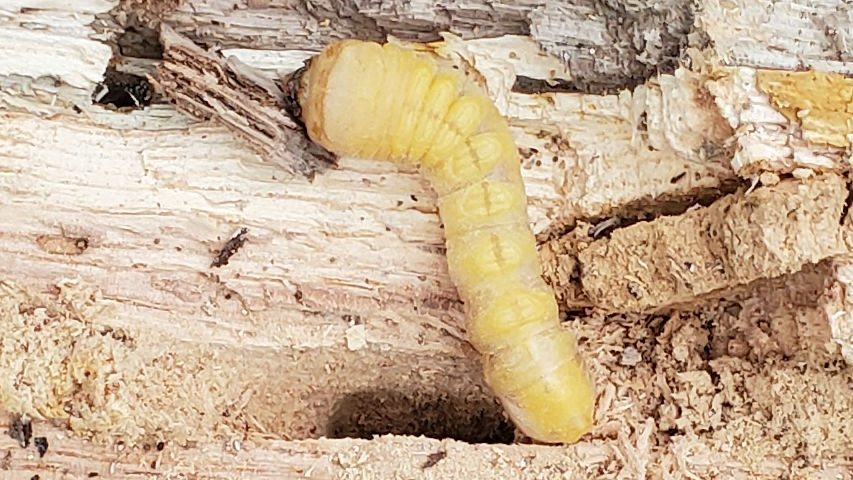
I haven't seen them click--the above is still the only live one I have seen up close; the others have been flying--but they otherwise seem to be pretty benign insects (and may even be beneficial, according to Michael Raupp of the University of Maryland Cooperative Extension Service).  They prey on larvae of other species, including those that burrow into decaying wood.  With my firewood stacks, I definitely see signs of infestation, sometimes severe.


Help dealing with creatures like this would be welcome.  Wood eating organisms may have their place, but are not a good fit for my oak firewood.

Saturday, June 20, 2020

Canning Dry Beans

I've posted before about cooking dry beans (primarily pinto, but my favorite is cranberry).  Beans keep a long time when dry, but they eventually become difficult to cook; the solution that has worked best for me is pressure cooking.

Another alternative is to can them.  Now that I'm using my pressure canner, that is an option.  Canning beans offers no advantage over storing dry with the exception that they are ready to eat without further preparation.  Canned beans certainly won't last longer than dry beans in terms of storage life (the latter are good for 30 years, if "dislike slightly" is good enough).

There are numerous sites that describe canning beans, but one thing is striking: most describe canning plain beans.  The NCHFP does have a recipe for canning beans with tomato or molasses sauce that optionally includes adding a small amount of bacon or pork.  As I've noted previously, when making a pot of beans for immediate use (or for freezing) I add onion, garlic, and bacon to the mix.

I decided to give my normal recipe a try.  The amount of bacon per jar would be comparable to that suggested by the NCHFP site, although my precise recipe isn't listed--the one featuring the bacon includes tomato or molasses, which is not the flavor I was going for at all (I cut up a pound of bacon for the batch, which worked out to about one ounce per jar--somewhat more than the 3/4 inch cube in the NCHFP recipe).

The NCHFP site recommends an overnight or quick soak, followed by 30 minutes' worth of boiling before putting in the jars.  The extra boiling might be justified if it helps the beans absorb more water so that they are fully hydrated.  But that level of cooking obviously isn't needed for tenderness: the beans process for 75-90 minutes at 240 degrees.  That cooks them very well.

I soaked three pounds of cranberry beans overnight, then poured off the water and added the onion, garlic, and bacon, placing them straight into the jars--similar to the process suggested by The Prairie Homestead.


I had some fresh onion, but not enough for the whole batch, so I hydrated some dried minced onion, following the process previously described.  Then it was just a matter of filling the jars, first with beans, then with water, to about the 1" of headspace line.

The NCHFP suggests 5 pounds of beans for 7 quarts (or 14 pints); The Prairie Homestead got more than 1 pound in each quart jar.  But these recipes don't include the onion or bacon.  I ended up with about 17 pints' worth of bean mix.  This was somewhat unfortunate, because my All American 921 canner cannot hold that many widemouth jars (various sites indicate the capacity is 19 pints, but that is based on standard-mouth jars, which are narrower--relatively few sites break the capacity down by different jar types, but those that do suggest the max capacity with widemouths is 16 pints).  In the picture, you'll see that I had one standard-mouth jar.  As I kept filling and filling and filling...I realized I was going to need all the space I had and then some.  Unfortunately, I could only find one empty standard-mouth jar.  I mostly use widemouths, though I have a number of standard-mouth jars--they were just all full of peach and blueberry preserves.   I was only able to get 15 jars into the canner, 7 below and 8 on top.

I processed them for about 80 minutes at 10 pounds.  When they came out of the canner, it was obvious they'd leaked a little, but not much: the water in the bottom of the canner looked (very) slightly cloudy and the jars had some fat-slickness to them.

After they cooled down, the liquid level inside the jars did recede quite a bit--In this case, I don't think it was all leakage, because all of the jars were low and there was nowhere near that amount in the bottom of the canner.  I think the fluid level dropped simply due to it being absorbed by the beans.  Although some of the beans appear to be high and dry in the picture, they are still tender (and cooked to perfection).

I'll probably still mostly cook beans for immediate use going forward, occasionally freezing one or two meals' worth.  However, canning does expand the opportunity to use them. Cooking a batch of beans is a big endeavor, and I don't always have the time when I would otherwise eat some.  Now I have them if I want them.  One pint is about the right quantity for one meal.


Saturday, June 13, 2020

"Finger Tight"

Most canning tutorials say that bands should be put on "finger tight" before loading into the canner. That's somewhat vague and qualitative.  As I have noted (more than once), I've historically had a problem getting the right tension.  With water bath canning I eventually just started tightening them pretty tight--call it firm--and dealt with the occasional creased lids.


Even with creased lids, I have almost always gotten a decent seal, and on the exceedingly rare occasion where a jar either hasn't sealed or the seal has later failed, it hasn't been on a creased lid (this is except for the reusable lids, which I have now completely abandoned--anybody want a case of them?).

Back to what in the world finger-tight means.  When I started pressure canning, I didn't want to tighten the jar lids too much, but was somewhat nonplussed at how loose I should make them.  I found this video at the Lehman's site which quantifies how far to tighten the bands:  Screw them on until first resistance, then about one inch further.  That's what I have done for the pressure canning and it has worked (although it's apparent there is some trace leakage from the jars...the residual water in the canner has a somewhat broth-like aroma).  The overall jar fluid level seems to have been okay (but one could ask how much higher it might have been if the jars had been tighter).


This PDF (also written up here) by Frances L. Reasonover of Texas A&M suggests that in a pressurized canner, leakage should be impossible--and, indirectly, indicates why the canner should be allowed to cool naturally (a point also made in the video above).  if the weight is released when the contents of the jars are still too hot, the pressure inside the jars will force an overflow.

In the pressure canner I usually haven't had overflow, but I have found that the contents of my jars are still boiling after the pressure drops to zero--and this continues for some time after they are put on the counter to cool.  The remaining water in the canner does have signs of a small amount of fluid leakage, and when I did a batch of pinto beans, it was apparent most jars had experienced a slight overflow during processing.  However, one thing I have not (so far) seen with the pressure canner is jars overflowing as they cool--this has on occasion happened when canning acid foods, mostly fruit in syrup (even with very tight bands). That might have been because I removed them from the water too soon.